AI in Aviation
Flying has always been a marvel of modern engineering. But today, artificial intelligence (AI) is making air travel safer, faster and more efficient. Before you even step foot in an airport, AI is already at work. Airlines now use AI-powered chatbots to help customers book flights, answer questions and even resolve common issues. These virtual assistants, available on airline websites and apps, can offer instant support. AI also helps airlines predict demand, adjusting ticket prices in real-time. Here are some of the ways AI is powering aviation.
Smoother Security
Airport security is essential, but can be time-consuming. AI is changing that. Facial recognition and automated screenings are speeding things up at a growing number of airports. Some airports now use biometric scanners that match your face to your passport, reducing long queues. AI-powered scanners can also detect prohibited items in luggage with greater accuracy than traditional methods.
Predictive Maintenance
Aircraft maintenance is critical for safety, and AI is making it smarter. Instead of relying on fixed inspection schedules, airlines now use AI to analyse real-time data from onboard sensors to predict when a part needs replacing. These systems monitor everything from engine performance to tyre wear, flagging potential issues. This means fewer unexpected delays and safer flights.
Air Traffic Control
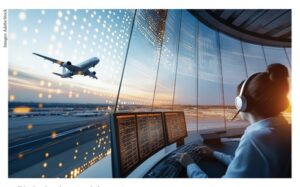
Managing thousands of flights daily is a complex task, but AI is helping air traffic controllers optimize routes and reduce delays. Machine learning algorithms analyze weather patterns, flight paths and airport congestion to suggest the most efficient routes. This not only saves fuel and helps make the environment greener, it also keeps flights on schedule. In the future, AI could enable semi- or fully autonomous air traffic control systems, reducing the margin for human error and improving efficiency.
Inflight Enhancements
Once you’re onboard, AI continues to improve your experience. Some airlines use AI to personalize entertainment recommendations based on your preferences. Communication is also getting a boost. AI-powered translation tools are helping cabin crew to communicate with passengers in multiple languages. This is especially useful on international routes.
Reducing Flight Delays And Cancellations
Nothing is more frustrating than a delayed or cancelled flight. AI is helping airlines stay one step ahead by predicting potential disruptions like severe weather or maintenance issues before they happen. For example, if a storm is approaching, AI can suggest alternative routes or reschedule flights proactively. Some airports even use AI to optimize gate assignments, reducing turnaround times between flights.
Even turbulence prediction is becoming smarter. By analyzing weather data in real-time, pilots can adjust their flight paths to avoid rough patches, making your journey smoother.
The Future Of Flight
While fully self-flying passenger planes are still years away, AI is already assisting pilots. Autopilot systems have been around for decades, but new AI advancements allow for better decision-making during flights. Companies like Airbus are testing AI co-pilots that can assist with take-off, landing and emergency situations.
In cargo aviation, autonomous drones are already delivering packages. It’s only a matter of time before similar technology is adopted for passenger flights though human pilots will likely remain in control for safety reasons.
AI is transforming aviation in ways that benefit both airlines and passengers. From quicker security checks to smoother flights and fewer delays to smarter inflight services, these innovations are making air travel more efficient and enjoyable. While we may not see robotic pilots anytime soon, the role of AI in aviation will only grow. So next time you board a plane, remember: AI is working hard behind the scenes to get you to your destination safely and efficiently.
*This article is featured in the September 2025 issue of AirAsia’s in-flight magazine ‘redcap’.
View a video on AI in Aviation: The Future of Flight Unveiled
here https://www.youtube.com/watch?v=70IRc1gUwUY