SUPERSONIC RETURN
The coming back of faster-than-sound commercial flight.
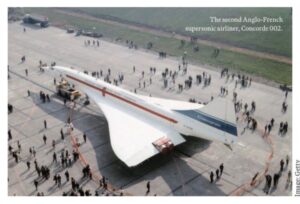
From 1976 to 2003, Concorde was the most powerful and fastest commercial jet ever to enter airline service. Flying faster than the Earth’s rotation, Concorde offered a unique experience: a passenger could have breakfast in London, fly to New York, and still sit down to breakfast again upon arrival. Despite this remarkable achievement, Concorde ceased operations in 2003, when all 14 aircraft in airline service were retired.
The Cost Of Speed
High operating costs were a major factor for the fleet’s grounding. Concorde was extremely fuel-hungry, burning roughly one tonne of fuel per passenger on a transatlantic crossing. Ticket prices reflected this, often costing around USD12,000. After September 11, demand for premium air travel declined further, just as long-haul subsonic aircraft were becoming more efficient, comfortable and economical.
As a result, interest in supersonic travel waned. Only 20 Concordes were ever built from an original plan for 100, and it remains debated whether the aircraft truly made a commercial profit for the airlines that operated it.
Noise Limitations
Noise was also a challenge. When an aircraft exceeds the speed of sound, shock waves reach the ground as sonic booms, which can be highly disruptive and, in extreme cases, cause damage. In the early 1970s, these concerns prompted the US to ban supersonic passenger flight over land. This restriction limited Concorde’s market, confining it largely to transatlantic routes over water. Even at take-off, the aircraft was notoriously loud caused by the enormous thrust to get airborne.
Although there have been occasional discussions about reviving Concorde itself, it is highly unlikely that the aircraft will ever return to service.
A New Era
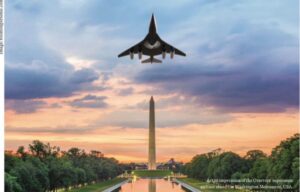
The future of supersonic travel now depends on overcoming the very issues that grounded Concorde – cost, noise, efficiency and environmental impact. This time, however, the outlook appears more promising. The most prominent contender is Overture, a next-generation supersonic airliner designed to replace Concorde as the world’s fastest commercial aircraft.
Overture is expected to cruise at Mach 1.7 – over 1,300 miles per hour – more than twice the speed of today’s conventional airliners. At these speeds, Overture could fly from London to New York in just three and a half hours, and from Los Angeles to Sydney in approximately six hours and 45 minutes. The aircraft is designed to carry between 65 and 80 passengers. Importantly, its manufacturer is targeting far more affordable fares, around USD5,000 for a New York-London round trip, well below the inflation-adjusted USD20,000 Concorde fares of the past.
The first test flight is planned for 2026, with entry into commercial service targeted for 2029. For many business travellers, Overture represents not just a technological leap, but the long-awaited return of time-saving, point-to-point supersonic travel.
China’s Supersonic Ambitions
China is also set to enter the supersonic race. The Commercial Aircraft Corporation of China (COMAC) is reportedly developing its own aircraft, known as the C949. This ambitious concept aims to fly at Mach 1.6-1.7, with a range of about 11,000 kilometres – around 50 percent greater than Concorde’s. The design focuses heavily on reducing sonic boom intensity through advanced aerodynamic shaping, dynamic fuel balancing and AI-assisted flight controls.
Developers claim the noise footprint could be as mild as that of a household hairdryer, potentially opening the door to supersonic flight over land. The target launch date is around 2049, with routes such as Shanghai to Los Angeles envisioned to take just five hours.
The Sound Of Progress
Faster-than-sound commercial flight is becoming realistic again. With advances in aerodynamics, materials, engines and noise-reduction technology, supersonic air travel appears poised to return – this time smarter, quieter and more economically viable. The skies may soon echo once more with the sound of progress.