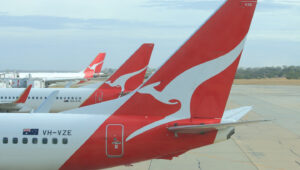
Qantas Boeing 737 Took Off With “51 Passengers Missing”
The Australian Transport Safety Bureau (ATSB) recently revealed an unusual but important safety incident involving a Qantas Boeing 737-800 on December 1, 2024. The aircraft departed even though 51 passengers were mistakenly marked as “not onboard” on the load sheet due to a simple data-entry error by the load controller.
Because the system assumed those 51 passengers were absent, the aircraft’s calculated take-off weight was 4,291 kg lighter than its actual weight. For context, a B737-800 can carry a maximum payload of about 20,540 kg, so an error of this magnitude can affect the weight, balance, and take-off performance.
Why This Matters
Take-off calculations rely heavily on accurate weight. When the aircraft appears lighter than it really is, the computed V-speeds—including V1 (decision speed), VR (rotate), and V2 (safety climb speed)—become too low.
This can lead to serious risks:
- If VR is too low, the aircraft may attempt to lift off before the wings can produce enough lift, causing the aircraft to remain stuck on the runway longer than expected.
- A tail strike can occur if the pilot pulls back too early, causing the aircraft’s tail or rear fuselage to scrape the runway.
- A severe tail strike can damage the fuselage, leading to potential pressurization loss, structural damage, and a dangerous take-off emergency.
A Reminder of Past Incidents
This Qantas event brings to mind other serious weight-related occurrences:
Emirates Flight EK407 – Melbourne (2009)
On 20 March 2009, an Emirates A340-500 suffered a massive 100-ton take-off weight error, one of the most serious in aviation history. The aircraft failed to get airborne properly, struck the runway, hit several structures past the runway end, and only managed to climb after the pilots increased thrust at the last possible moment.
Miraculously, all 275 people survived. Australian authorities later described the near-disaster as “the closest we’ve ever come to a major aviation catastrophe in Australia.”
Sabah Air Nomad Crash – Malaysia (1976)
In Malaysia, on 6 June 1976, a Nomad aircraft operated by Sabah Air crashed when approaching Kota Kinabalu. Investigators determined that the aircraft was not operated within strict weight and balance limits, causing unpredictable handling at low speed—especially during landing. This event known as the ‘Double Six Tragedy,’ claimed the lives of several local political leaders.
These incidents highlight why pilots take weight and balance checks so seriously. An aircraft outside its limits can behave unpredictably and dangerously.
What Happened in the Current Qantas Case?
Fortunately, the Qantas B737-800 involved in this latest incident had:
- Plenty of power margin, and
- A long enough runway at Canberra,
allowing the aircraft to take off safely despite the incorrect data. It later landed without further issues.
What Qantas Has Changed
Following the report, Qantas has strengthened its procedures:
- A mandatory headcount will now be required when discrepancies are detected.
- Load controllers must contact the flight crew directly if any load-sheet irregularities arise.
These improvements aim to ensure such errors do not recur.
View a YouTube Video here https://www.youtube.com/shorts/GIFBGFZu7cQ