The Invisible Crew What Happens While You Sip Your Coffee
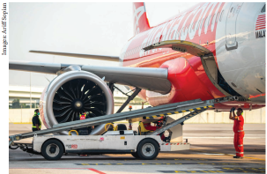
An aircraft turnaround is a choreographed ballet performed in a hurricane. Look out your window the next time your plane pulls up to the gate. In the next 25 to 35 minutes (the standard aircraft turnaround for low-cost carriers), a small group of men and women will swarm your aircraft, empty it, refuel it, restock it and send it skyward again, often before you’ve finished your coffee in the terminal. Most passengers never notice them. But the ramp is where an airline’s profit, schedule and safety are truly won or lost, and the people who work it are some of the most skilled operators in aviation industry.
The Unseen Ballet
We spend so much of our imagination on the cockpit – the pilots, the instruments, the calm voice over the intercom. But the real drama, the split-second choreography, happens on the tarmac. The moment the wheels stop and the parking brake sets, a silent stopwatch starts. Marshals guide the aircraft into its gate with practiced hand signals, precise to the inch. Chocks go under the wheels. Ground power connects so the engines can shut down.
Then it’s controlled chaos: baggage handlers form a chain from cargo hold to belt loader, fuelers hook up hoses and pump thousands of liters of jet fuel, cabin cleaners sprint down the aisle, caterers restock galleys, and lavatory and water service technicians do their unglamorous but essential work – all simultaneously, all within arm’s reach of each other, all against a countdown clock that airlines measure in ringgits per minute.
A delayed turnaround doesn’t just annoy passengers. It ripples through the day’s entire schedule, delaying the next flight, and the one after that. The ramp crew is the reset button for the whole system.
The Math Beneath The Suitcases
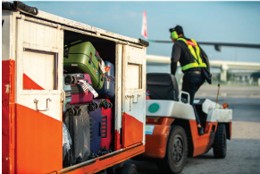
Here’s what most travelers don’t realize: the way your suitcase gets loaded isn’t just about tidiness. It’s physics that helps determine whether the aircraft can safely take off at all. Every commercial flight has a Weight and Balance calculation, prepared before departure and adjusted right up until pushback. It accounts for the weight of the aircraft itself, fuel, passengers, crew, cargo and baggage. But weight alone isn’t the whole story. Where that weight sits matters just as much.
Think of the aircraft as a seesaw balanced on its wings. The center of gravity must fall within a narrow, certified range. Load too much weight toward the tail, and the nose can become dangerously light on rotation, robbing the pilots of the control authority they need during takeoff. Load too much up front, and the aircraft becomes nose-heavy, harder to rotate, and less efficient in cruise, burning more fuel to fight its own imbalance. In extreme cases, a poorly balanced aircraft can become uncontrollable or approach a stall at exactly the wrong moment – seconds after leaving the runway.
So when you see handlers directing certain bags to certain cargo holds, or splitting a full load between the forward and aft compartments, they’re not improvising. They’re following a load plan generated by dispatchers and confirmed by the flight crew, who cross-check the final numbers before signing off on departure. Even last-minute changes like a gate-checked stroller, a late bag or a shifted cargo pallet can prompt a recalculation. Nothing moves into that belly without a reason.
Respect The Ramp
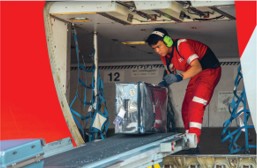
Next time you’re gazing out the window during a layover, watching what looks like organized chaos below, know this: those workers are racing against the clock, managing jet blast, moving vehicles and extreme weather, all while quietly running the calculations that keep your flight balanced in the sky.
The cockpit gets the glory. But the ramp is where aviation’s promise – get there safely, get there on time – is actually kept, 30 minutes at a time.
This article is featured in the October 2026 issue of AirAsia’s in-flight magazine redcap.
For more stories, kindly read my latest book, A Pilot’s Story. More details are found