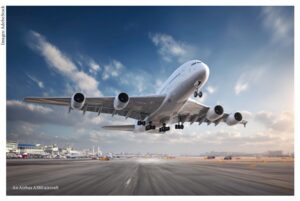
Sky Legend: The remarkable machine that shape aviation history
Every aircraft has a story to tell. For many passengers today, flying may feel routine, but the machines that shaped aviation history are anything but ordinary. Let’s take a journey through some of the world’s most iconic aircraft and the stories that made them legendary.
Plane That Changed Everything
When the Douglas DC-3 first flew in 1935, it revolutionised air travel. Before its arrival, flying was often uncomfortable, expensive and unreliable. The DC-3 changed that with its sturdy design, dependable engines and ability to carry passengers profitably without government subsidies. Airlines quickly embraced it, and by the late 1930s, the DC-3 had become the backbone of commercial aviation.
During World War II, the DC-3, known in military service as the Douglas C-47 Skytrain, carried troops, supplies and even towed gliders into combat zones. After the war, many of these aircraft returned to civilian life, flying passengers and cargo for decades. Remarkably, a small number of DC-3s are still in service today, a testament to their durability
Supersonic Elegance
Few aircraft captured the public imagination like the Concorde. Sleek, needle nosed and capable of cruising at twice the speed of sound, it was the very definition of glamour in the skies. Introduced in 1976, Concorde could whisk passengers from London to New York in under four hours – fast enough to outrun the setting sun.
But Concorde was more than speed. It symbolised ambition; a joint project between Britain and France that pushed the boundaries of engineering. Flying aboard Concorde was an event in itself, with celebrities, business leaders and royalty among its passengers. Yet its high operating costs, limited seating and environmental concerns eventually grounded the fleet in 2003. Still, Concorde remains a symbol of what aviation can achieve when it dares to dream.
The Queen Of The Skies
If Concorde was about exclusivity, the Boeing 747 was about accessibility. Nicknamed the ‘Queen of the Skies,’ the aircraft debuted in 1970 and instantly transformed long-haul travel. With its distinctive hump and double-deck design, it could carry hundreds of passengers across oceans, making international travel more affordable.
The 747 soon became the aircraft of choice for airlines worldwide. It also served as Air Force One for US presidents, and transported cargo ranging from racehorses to components for space shuttles. For many travellers, their first glimpse of a 747 at the gate promised adventure. Although newer, more efficient aircraft like the Airbus A350 or Boeing 787 Dreamliner are gradually replacing it, the 747 remains an icon of aviation’s golden age.
Giant Of The Modern Era
When the Airbus A380 entered service in 2007, it became the largest passenger aircraft ever built. With two full decks and the capacity to carry more than 800 passengers in an all-economy layout, it redefined the scale of commercial aviation. For airlines, it represented prestige; for passengers, it offered space, comfort and the novelty of flying on a true giant.
Yet the A380’s story is bittersweet. While passengers loved it, airlines struggled with its economics. The rise of smaller, fuel efficient aircraft made the superjumbo less practical and production ended in 2021. Still, the A380 remains beloved, and for those lucky enough to fly on one, it’s an unforgettable experience.
More Than Machines
What makes these aircraft iconic is not just their engineering, but the way they shaped human experience of flight. The DC-3 made air travel practical. Concorde made it glamorous. The 747 made it accessible. The A380 made it monumental.
As you settle into your seat today, consider the lineage of the aircraft carrying you. It is part of a long story. The next chapter may belong to sustainable fuels, electric propulsion or even hypersonic travel. But the legends of the past remind us that every aircraft is more than metal and engines – it is a vessel of dreams.
*This article is featured in the May 2026 issue of AirAsia’s in-flight magazine redcap.